AI vs Data Science: What’s the Difference?
 Aug 11, 2026
 12:01 AM
Artificial intelligence and data science are two of the most talked-about areas in technology today. Both fields use data, computer systems, and advanced methods to solve problems. Because they share some of the same tools and skills, many people wonder if AI and data science are the same thing.
They are not.
Data science focuses on collecting, analyzing, and understanding data to find useful information. Artificial intelligence focuses on building systems that can perform tasks that normally require human intelligence, such as recognizing patterns, making predictions, or understanding language. The two fields often work together, but they have different goals and career paths. Understanding the difference can help you choose the right direction for your education and career.
What Is Data Science?
Data science is the process of using data to answer questions and support better decisions. A data scientist may collect data from different sources, clean it, study patterns, and build models that help a business understand what is happening.
For example, a retail company may use data science to study customer purchases. The company could use the results to understand which products are popular, when customers are most likely to buy, and where sales may be falling.
According to the U.S. Bureau of Labor Statistics, data scientists use analytical tools and techniques to extract meaningful insights from data. The occupation is projected to grow much faster than average from 2024 to 2034.
Common data science tasks include:
- Collecting and cleaning data
- Analyzing large datasets
- Finding trends and patterns
- Creating reports and visualizations
- Building statistical models
- Helping businesses make data-based decisions
What Is Artificial Intelligence?
Artificial intelligence, or AI, refers to computer systems designed to perform tasks that can require human-like abilities. These tasks can include:
- Recognizing patterns
- Understanding text
- Making predictions
- Classifying information
- Recommending products or content
- Supporting decision-making
Machine learning is one important part of AI. A machine learning system can learn patterns from data and use those patterns to make predictions or decisions.
For example, a company may use a machine learning model to identify unusual transactions that could require further review.
AI is used across many industries, including finance, healthcare, transportation, retail, manufacturing, and technology.
However, AI systems must be designed and used carefully. The National Institute of Standards and Technology (NIST) recommends considering factors such as reliability, security, transparency, privacy, and fairness when managing AI risks.
AI vs Data Science: The Main Difference
The easiest way to understand the difference is to look at the main goal of each field.
Data science is mainly about understanding data and finding useful insights.
AI is mainly about creating systems that can perform tasks, make predictions, or support decisions using data and models.
For example, imagine an online store.
A data scientist might study customer data to find out which products sell the most.
An AI professional might build a recommendation system that automatically suggests products to customers based on their interests and previous activity.
Both professionals may use data, programming, statistics, and machine learning. Their work can overlap, but their main objectives are different.
AI and Data Science: Skills You Need
There is some overlap between the skills used in both careers.
Data Science Skills
People working in data science often need knowledge of:
- Statistics
- Mathematics
- Python
- SQL
- Data analysis
- Data visualization
- Databases
- Machine learning
Strong analytical thinking is also important because data scientists need to understand what the numbers mean and communicate their findings clearly.
AI and Machine Learning Skills
AI professionals may need skills in:
- Python
- Machine learning
- Neural networks
- Data preparation
- Model development
- Algorithms
- Software development
- Model testing and evaluation
The exact skills required depend on the job. Some AI positions may focus heavily on machine learning, while others may involve software development, data engineering, or AI product development.
Which Career Is Better: AI or Data Science?
There is no single answer because the better choice depends on your interests and career goals.
Data science may be a good fit if you enjoy:
- Working with numbers
- Finding patterns in data
- Creating reports
- Solving business problems
- Statistics and analysis
AI and machine learning may be a better fit if you enjoy:
- Building intelligent systems
- Programming
- Machine learning models
- Automation
- Working with new technology
Both fields can offer strong career opportunities. The U.S. Bureau of Labor Statistics currently lists data science among the fastest-growing occupations, with a projected 34% employment increase from 2024 to 2034.
Career outcomes can vary based on education, experience, location, technical skills, and the type of employer. It is better to focus on building useful skills than choosing a field only because of salary claims.
Do AI and Data Science Work Together?
Yes. In many real-world projects, AI and data science are closely connected.
Before an AI model can be useful, someone may need to collect, clean, and prepare the data. Data scientists and other data professionals can play an important role in this process.
For example, a healthcare organization may have a large amount of patient-related data. A data professional could prepare and analyze the information, while an AI or machine learning professional could develop a model for a specific approved use.
This is why learning data skills can be useful for people interested in AI.
Common Tools Used in AI and Data Science
The tools you learn will depend on your career path, but some technologies are common across both fields.
Python
Python is widely used for data analysis, machine learning, automation, and software development.
SQL
SQL is important for working with data stored in relational databases. It is especially useful for data-focused roles.
Jupyter
Jupyter environments are commonly used for data analysis, experiments, and working with Python-based data tools.
Machine Learning Libraries
Professionals may work with libraries and frameworks such as scikit-learn, TensorFlow, or PyTorch, depending on the project.
Learning tools is useful, but tools alone do not make someone job-ready. You also need to understand the concepts behind the tools and practice applying them to real problems.
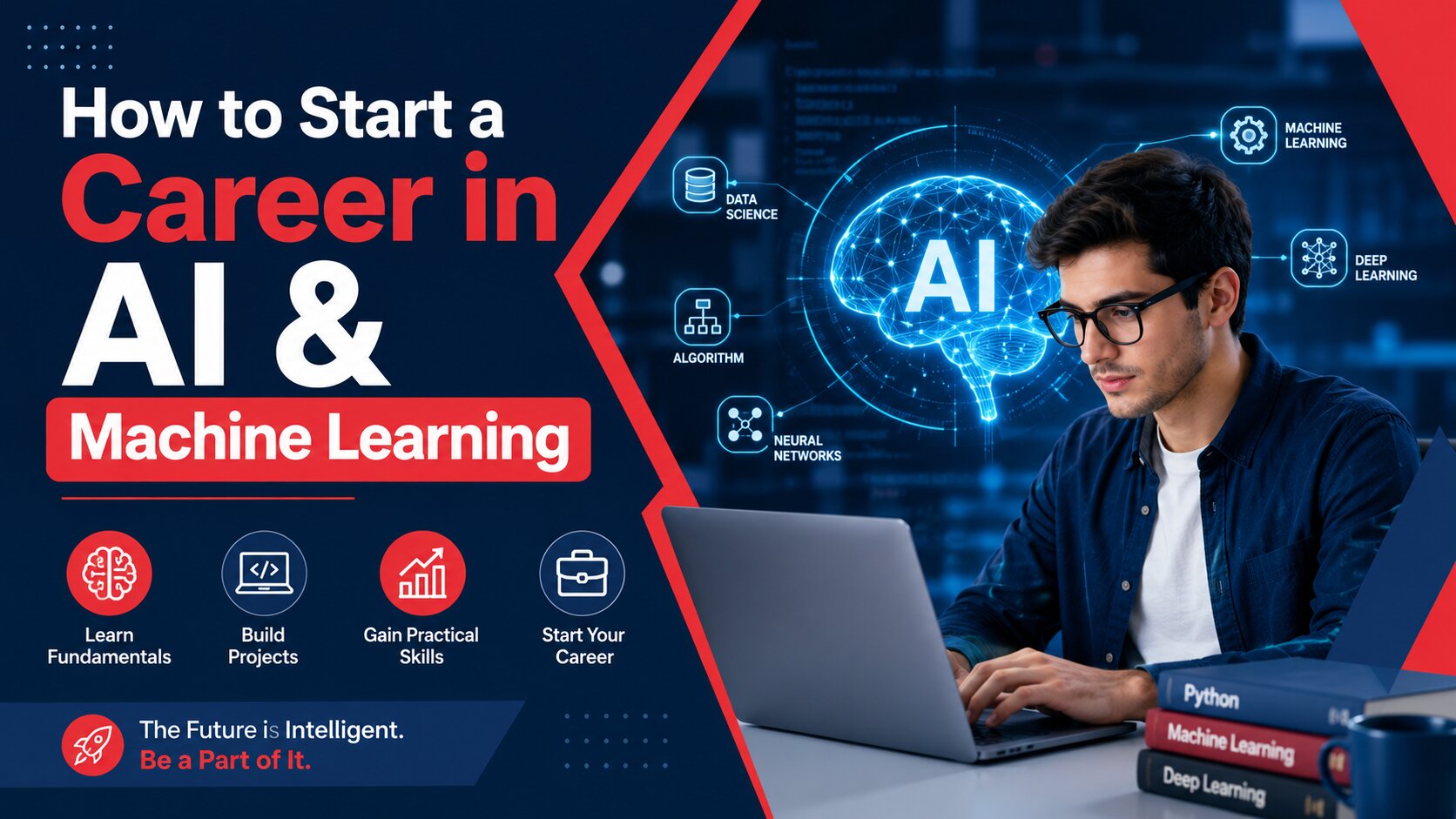
How to Start a Career in AI and Machine Learning
If you are new to the technology field, start with the basics instead of trying to learn everything at once.
Step 1: Learn Programming Basics
Start with Python and learn basic concepts such as variables, functions, loops, and data structures.
Step 2: Understand Data
Learn how data is stored, cleaned, analyzed, and presented. Basic SQL can also be very helpful.
Step 3: Learn Machine Learning Fundamentals
Understand concepts such as training data, testing data, classification, regression, and model evaluation.
Step 4: Practice With Projects
Create small projects using real or publicly available datasets. Projects give you a chance to apply what you learn and demonstrate your skills.
Step 5: Get Structured Training
Self-study can be useful, but a structured course can give beginners a clear learning path and hands-on practice.
If you are looking for career-focused training, explore the Best AI & Machine Learning Course in Dallas offered by DFW IT Career.
The course can be a natural next step for readers who want to develop practical AI and machine learning skills.
Why Choose DFW IT Career?
Choosing a training provider is an important decision. Before enrolling in any program, review the curriculum, learning format, instructor experience, hands-on work, and career support available.
DFW IT Career provides technology training for people who want to build practical skills and prepare for IT careers.
The Best IT Training Program in Dallas should not only teach concepts. It should also help students understand how those skills are used in real work environments.
If you are exploring other technology career paths, you can also consider related areas such as cybersecurity, DevOps, QA automation, and business analysis.
AI vs Data Science: Quick Comparison
AreaAIData ScienceMain goa lBuild systems that perform intelligent tasks Find insights from dataMain focusPrediction, automation, intelligent systemsAnalysis, statistics, data interpretation Common skills Python, machine learning, algorithms Python, SQL, statistics, data analysis Uses data? Yes, Programming Often important Important Machine learning Common Often used Career examples AI Engineer, ML Engineer Data Scientist, Data Analyst. The roles can overlap, and job titles can vary between companies. Always check the responsibilities listed in an individual job posting rather than relying only on the job title.
Is AI or Data Science Right for Beginners?
Both can be challenging for beginners, especially if you have little experience with programming or mathematics.
You do not need to master everything before you start. A better approach is to build your knowledge step by step.
Start with:
- Basic programming
- Data fundamentals
- Problem-solving
- Statistics
- Machine learning concepts
- Practical projects
If you enjoy working with data and business problems, data science may be a good direction. If you enjoy programming and building systems that learn from data, AI and machine learning may be a better fit.
Final Thoughts
AI and data science are closely related, but they are not the same field. Data science focuses on turning data into useful information and insights. AI focuses on creating systems that can perform tasks, make predictions, or support decisions using data and models.
Both areas require technical skills, problem-solving, and continuous learning. Neither career is a shortcut to success. Your results will depend on the skills you build, the quality of your practice, your education, and the experience you gain.
If you want to start learning AI and machine learning in a structured environment, the Best AI & Machine Learning Course in Dallas can be a useful place to begin.
Frequently Asked Questions
Is AI the same as data science?
No. AI focuses on creating systems that can perform intelligent tasks, while data science focuses on analyzing data and finding useful insights. The two fields often overlap.
Is data science required for AI?
Not always. However, knowledge of data, statistics, and programming can be very helpful when learning AI and machine learning.
Which is easier to learn, AI or data science?
Neither field is automatically easier. Your experience with programming, mathematics, statistics, and data will affect how quickly you learn.
Can I start an AI career without experience?
Yes, you can begin learning without professional experience. Start with programming and data basics, then build projects and gain practical experience through structured training.
Is AI a good career choice?
AI can offer strong career opportunities, but it requires ongoing learning. Technology changes quickly, so professionals need to keep developing their technical and problem-solving skills.
Where can I study AI and machine learning in Dallas?
DFW IT Career offers an AI and Machine Learning training program for people interested in developing skills in this area. Review the course curriculum and training details before making an enrollment decision.