CCNA vs CCNP: Which Certification Should You Get First?
 Sep 04, 2026
 01:18 AM
If you're planning a career in networking, you've probably run into the same question every beginner asks: should I start with CCNA or jump straight into CCNP? It's one of the most common questions we get from students exploring our CCNA training course in Dallas and our CCNP training course in Dallas. Both certifications come from Cisco, both are widely respected by employers, and both can open doors to solid IT careers. But they serve very different purposes, and choosing the wrong starting point can slow down your career instead of speeding it up. In this guide, we'll break down what CCNA and CCNP actually are, how they differ, and which one makes sense for where you are right now in your networking journey.
What is CCNA?
CCNA (Cisco Certified Network Associate) is Cisco's entry-level networking certification. It's designed to validate foundational knowledge of how networks work — routing, switching, IP addressing, network security basics, and network troubleshooting.
Think of CCNA as the certification that proves you understand how a network functions. It's built for:
- People with little or no prior networking experience
- Help desk and IT support staff who want to move into networking roles
- Career changers entering the tech industry
- Anyone who wants a strong foundation before specializing further
Our CCNA training course in Dallas covers network fundamentals, IP addressing and subnetting, routing and switching, wireless networking, and network security basics, all through hands-on labs rather than just theory. It's a common starting point for students who later move on to our Tech Analyst (Help Desk) course or build toward more advanced networking roles.
What is CCNP?
CCNP (Cisco Certified Network Professional) is the next tier up. It's built for people who already understand networking basics and want to go deeper into enterprise-level design, implementation, and troubleshooting.
Where CCNA proves you can operate a network, CCNP proves you can design, manage, and troubleshoot one at an enterprise scale. It's aimed at:
- Network engineers and administrators with some hands-on experience
- CCNA holders ready to move into mid-level and senior networking roles
- IT professionals who want to specialize in enterprise infrastructure
Our CCNP training course in Dallas covers advanced routing and switching, network security fundamentals, automation and programmability, infrastructure services, and enterprise network troubleshooting. Cisco itself recommends having CCNA-level knowledge (or equivalent experience) before attempting CCNP, and we recommend the same to our students.
CCNA vs CCNP: Key Differences
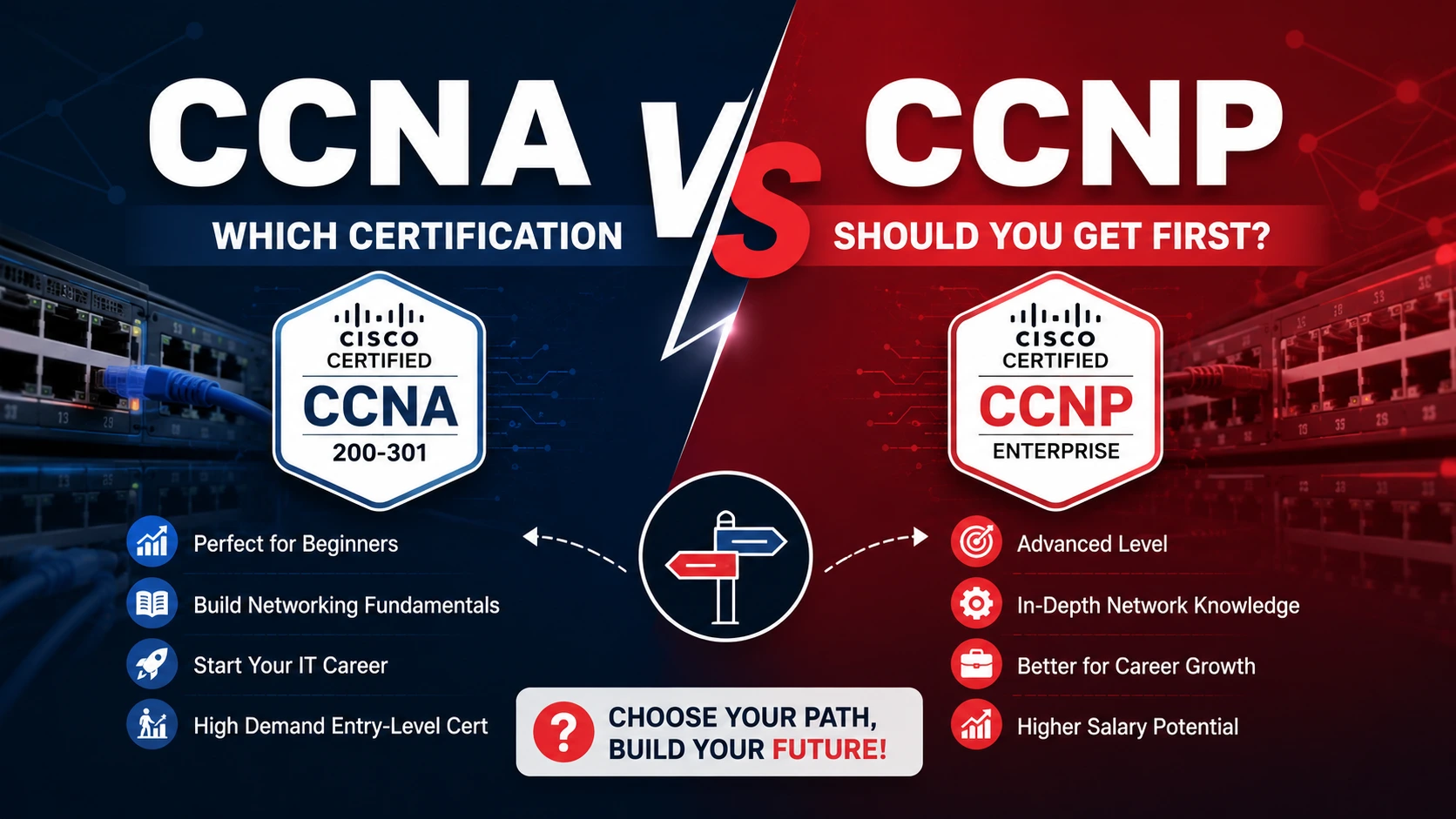
Factor CCNACCNP Level Entry-level (Associate)Advanced (Professional) Best forBeginners, career changers, help desk staff Experienced professionals, CCNA holders Focus Networking fundamentals Enterprise network design & troubleshooting Prerequisite None Basic networking knowledge or CCNA recommended Typical roles after certification Network Support Engineer, IT Support Specialist, Network Technician Network Engineer, Network Administrator, Infrastructure Engineer Depth of topics Broad, foundational Deep, specialized, enterprise-focused
Which One Should You Get First?
For almost everyone starting out, CCNA comes first. Here's why:
- CCNP builds on CCNA-level knowledge. Enterprise routing, advanced switching, and network automation topics in CCNP assume you already understand the fundamentals CCNA teaches. Skipping ahead usually means struggling with concepts you haven't been introduced to yet.
- Employers use CCNA as a baseline hiring filter. Most entry-level networking and IT support job postings ask for CCNA or equivalent experience, not CCNP.
- CCNA gets you into the field faster. You can start working as a Network Technician or IT Support Specialist with CCNA, gain real hands-on experience, and pursue CCNP once you're already working in networking.
- It's the smarter financial decision. Instead of investing time and money into an advanced certification before you're ready, CCNA lets you validate your skills, start earning, and then reinvest in CCNP once you have practical context to apply what you learn.
The exception: if you already have solid hands-on networking experience — for example, you've worked in IT support, managed routers and switches informally, or hold an equivalent certification — you may be able to move directly into CCNP-level material. This is something we assess individually with students during career counseling before enrollment.
How CCNA and CCNP Fit Into a Long-Term Networking Career
A typical progression looks like this:
- Start: Tech Analyst / Help Desk role → build real-world troubleshooting experience
- Certify: Earn CCNA → move into Network Support Engineer or Network Technician roles
- Grow: Gain 1–2 years of hands-on networking experience
- Advance: Earn CCNP → move into Network Engineer, Network Administrator, or Infrastructure Engineer roles
- Specialize: Pursue advanced tracks (security, automation, or Cisco specializations) based on your career goals
If you're just entering IT, our blog on what a Tech Analyst does and how Dallas companies value help desk professionals are good starting points before you commit to a networking certification track. If security interests you alongside networking, it's also worth reading our guide to top cybersecurity certifications, since networking and security skills overlap heavily in real enterprise environments.
Final Thoughts
CCNA and CCNP aren't competing certifications — they're two stages of the same career path. CCNA proves you can operate and support a network. CCNP proves you can design and manage one at scale. Start with CCNA if you're new to networking or IT, and treat CCNP as the next step once you have some hands-on experience under your belt.
At DFW IT Career, both our CCNA and CCNP training programs are taught by Cisco-certified instructors with real enterprise networking backgrounds, combining structured curriculum with hands-on labs so you're prepared for both the certification exam and the job itself.
Not sure which course fits your current experience level? Contact our team for free career counseling, or explore all our certification courses to see the full path from beginner to advanced networking professional.
Frequently Asked Questions
Can I skip CCNA and go straight to CCNP?
Technically yes, since Cisco doesn't enforce CCNA as a formal prerequisite for CCNP. But CCNP material assumes CCNA-level knowledge, so most students without networking experience struggle if they skip it. We recommend CCNA first unless you already have hands-on networking background.
How long does it take to complete each course?
Course duration depends on your schedule and pace, with most DFW IT Career programs designed to be completed in a matter of weeks through structured, hands-on training. Contact us for exact timelines for CCNA and CCNP batches.
Is CCNA enough to get a networking job?
Yes. CCNA is widely recognized by employers and is often the minimum requirement for roles like Network Technician, IT Support Specialist, and Network Support Engineer.
Do I need CCNA before enrolling in the CCNP course at DFW IT Career?
Basic networking knowledge or a CCNA certification is recommended before starting CCNP, since the course builds on foundational routing and switching concepts. If you're unsure whether you're ready, our team can help assess your level during career counseling.