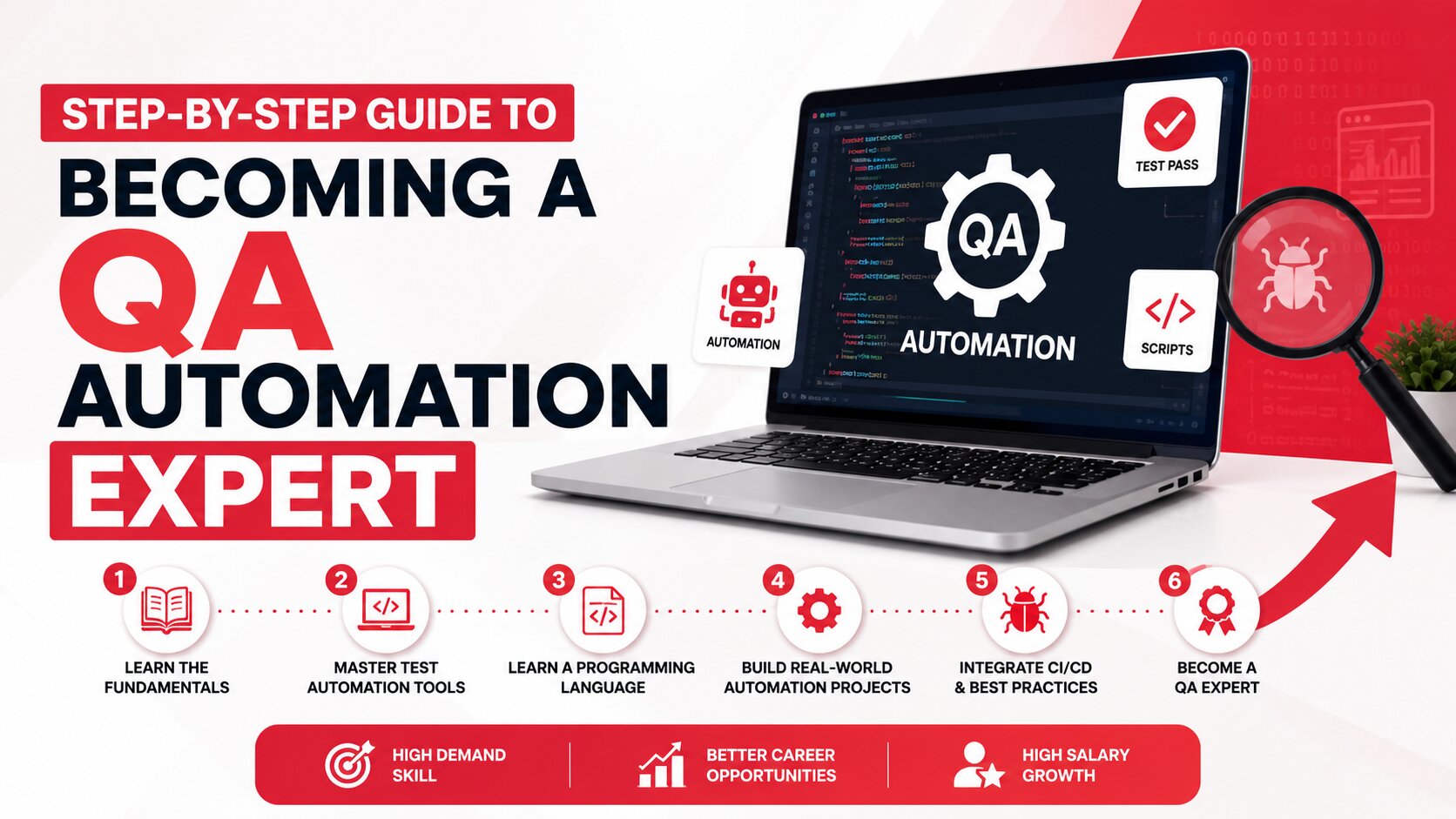
Step-by-Step Guide to Becoming a QA Automation Expert
 May 11, 2026
 09:34 PM
Software companies release new updates faster than ever. To make sure applications work properly, businesses need skilled QA Automation professionals who can test software quickly and accurately. QA Automation is now one of the fastest-growing careers in the technology industry. It combines software testing, problem-solving, and automation tools to improve software quality and reduce manual work. If you want to build a stable IT career, becoming a QA Automation Expert can be a smart choice. This guide explains the skills, tools, and training you need to start your journey.
What Is QA Automation?
QA Automation stands for Quality Assurance Automation. It is the process of using tools and scripts to test software automatically instead of checking everything manually. QA Automation professionals help companies:
- Find software bugs
- Improve application performance
- Reduce testing time
- Deliver better user experiences
Automation testing is used in:
- Websites
- Mobile apps
- Banking systems
- Healthcare software
- E-commerce platforms
What Does a QA Automation Expert Do?
A QA Automation Expert tests software systems to make sure they work correctly before release. Their daily tasks may include:
- Writing automated test scripts
- Running software tests
- Reporting bugs and errors
- Working with developers and QA teams
- Improving testing processes
They help companies release stable and secure software products.
Why QA Automation Is a Good Career
QA Automation continues to grow because businesses want faster software development and better quality control.
Benefits of this career include:
- High demand in the IT industry
- Strong salary potential
- Remote work opportunities
- Long-term career growth
According to the U.S. Bureau of Labor Statistics technology jobs are expected to grow steadily in the coming years.
Step 1: Learn Software Testing Basics
Before learning automation tools, you should understand the basics of software testing.
Important concepts include:
- Functional testing
- Manual testing
- Bug reporting
- Test cases and test plans
Learning these basics helps you understand how software quality works.
Step 2: Understand Programming Fundamentals
QA Automation Experts often use programming languages to create test scripts.
Popular languages include:
- Java
- Python
- JavaScript
You do not need to become a software developer, but basic coding knowledge is important. You can also improve your coding skills with free learning resources from the MDN Web Docs platform.
Step 3: Learn Automation Testing Tools
Automation tools help testers run scripts and identify software problems faster.
Common tools include:
- Selenium
- Cypress
- Playwright
- JUnit
- TestNG
Hands-on practice with these tools is important for getting job-ready skills.
Step 4: Learn About APIs and Databases
Modern applications often connect to APIs and databases. QA Automation professionals should understand:
- API testing
- SQL basics
- Data validation
- Backend testing concepts
Knowledge of APIs helps testers work with modern web applications more effectively.
Step 5: Gain Practical Experience
Practice is one of the most important parts of learning QA Automation.
You can:
- Create automation projects
- Test sample websites
- Build test scripts
- Practice bug tracking
Real-world projects help you build confidence and improve problem-solving skills.
Step 6: Join a Professional Training Program
Structured training can help beginners learn faster and avoid confusion. A professional QA Automation Expert course in USA can teach you:
- Automation frameworks
- Real-world testing projects
- Industry tools
- CI/CD testing basics
- Career-focused skills
Hands-on learning is important because employers prefer candidates with practical experience.
Why Choose DFW IT Career?
Choosing the right training provider can improve your learning experience and career opportunities. DFW IT Career offers practical IT training designed for beginners and career changers. Students benefit from:
- Industry-focused training
- Hands-on projects
- Career guidance
- Flexible learning options
The programs are designed to prepare students for real job environments.
Career Opportunities After QA Automation Training
After completing training, you may apply for positions such as:
- QA Automation Engineer
- Software Test Engineer
- QA Analyst
- SDET (Software Development Engineer in Test)
With experience, professionals can move into senior automation and DevOps roles.
Skills Employers Look For
Companies often look for QA Automation professionals who have:
- Problem-solving skills
- Attention to detail
- Basic coding knowledge
- Understanding of testing frameworks
- Communication skills
Employers also value candidates who can learn new technologies quickly.
Final Thoughts
QA Automation is one of the best career paths for people who want to work in software testing and technology. Businesses continue to invest in automation because it improves software quality and speeds up development. With the right training, practical experience, and consistent learning, you can build a successful career in this growing field. If you are ready to begin, a professional QA Automation Expert course in USA can help you develop the skills employers need today.
FAQs
What is QA Automation?
QA Automation is the process of using tools and scripts to test software automatically.
Is QA Automation a good career?
Yes. It offers strong job demand, good salaries, and long-term career growth opportunities.
Do I need coding skills for QA Automation?
Basic programming knowledge is helpful for creating and managing test scripts.
Which tools are used in QA Automation?
Popular tools include Selenium, Cypress, Playwright, JUnit, and TestNG.
Where can I learn QA Automation in the USA?
You can join the QA Automation Expert course in USA offered by DFW IT Career.