How to Start a Career in AI & Machine Learning
 Jul 27, 2026
 08:05 PM

Artificial Intelligence isn't a "someday" technology anymore. It's already writing code, diagnosing medical scans, running fraud checks on your credit card, and deciding what shows up in your Netflix queue. Every one of those systems needs people behind it — engineers, analysts, and researchers who understand how AI and Machine Learning actually work. If you've been thinking about switching into this field, 2026 is one of the best times to start.
The good news? You don't need a PhD or a decade of coding experience to break in. What you need is a clear roadmap, the right skills, and consistent effort. Here's how to actually get there.
Why AI & Machine Learning Is Worth Pursuing Right Now
Every industry — healthcare, finance, retail, logistics — is investing heavily in AI-driven tools. That demand translates directly into jobs. Machine Learning Engineers and Data Scientists routinely earn between $100,000 and $150,000 a year in the U.S., and the field is projected to keep growing well into the next decade as more companies automate decision-making and build predictive systems.
It also helps that AI isn't replacing every job in tech — it's reshaping how existing jobs get done. If you've followed how automation is reshaping other corners of IT, you've probably already seen this play out. Software testing, for instance, has changed dramatically as AI tools take over repetitive test cases; we covered this shift in detail in our piece on How AI is changing software testing in 2026 . The pattern is the same across nearly every technical role: professionals who understand AI have an edge, and those building AI systems directly are in the highest demand of all.
Step 1: Get Comfortable With the Fundamentals
Before touching a machine learning model, you need a working understanding of a few core building blocks:
- Python programming — the primary language for almost all AI/ML work
- Statistics and basic linear algebra — enough to understand how models make predictions
- Data handling — cleaning, organizing, and analyzing datasets using tools like Pandas
- Basic data visualization — turning numbers into insights people can act on
None of this requires a math degree. Most people learn it through structured, hands-on practice rather than textbooks. The key is writing code and running small experiments early, instead of only reading about theory.
Step 2: Learn Core Machine Learning Concepts
Once the basics feel natural, move into actual machine learning. This includes:
- Supervised vs. unsupervised learning — the two broad categories of ML problems
- Regression and classification models — predicting numbers or categories from data
- Decision trees, random forests, and clustering — common algorithms used across industries
- Model evaluation — knowing whether your model actually works, not just whether it runs
This is where most beginners either get hooked or get overwhelmed. The difference usually comes down to whether they're learning through real projects — predicting house prices, detecting spam, segmenting customers — instead of isolated exercises with no context.
Step 3: Go Deeper With Deep Learning and NLP
Once you're comfortable with core ML, the next layer is deep learning — neural networks, convolutional networks (CNNs) for image recognition, and natural language processing (NLP) for text and chatbots. This is also where transformer models like BERT and GPT come in, which now power everything from customer service bots to search engines.
If you're specifically interested in building applications on top of large language models rather than training them from scratch, it's worth looking at how that specialization differs from traditional ML. We break down that distinction in our guide to the Generative AI course and for those more interested in building autonomous, task-driven AI systems, Our Agentic AI course covers that emerging niche as well.
Step 4: Build Real Projects — Not Just Tutorials
Employers don't hire based on certificates alone; they hire based on proof you can build something that works. A strong portfolio might include:
- An image classifier trained on a public dataset
- A chatbot or text classification tool using NLP
- A recommendation engine similar to what e-commerce sites use
- A deployed model served through a simple API using Flask or FastAPI
Deployment matters more than people expect. A model that only runs inside a notebook isn't job-ready. Learning to package and serve a model — even a basic one — shows hiring managers you understand the full lifecycle, not just the training step.
Step 5: Understand How AI Fits Into the Bigger Tech Picture
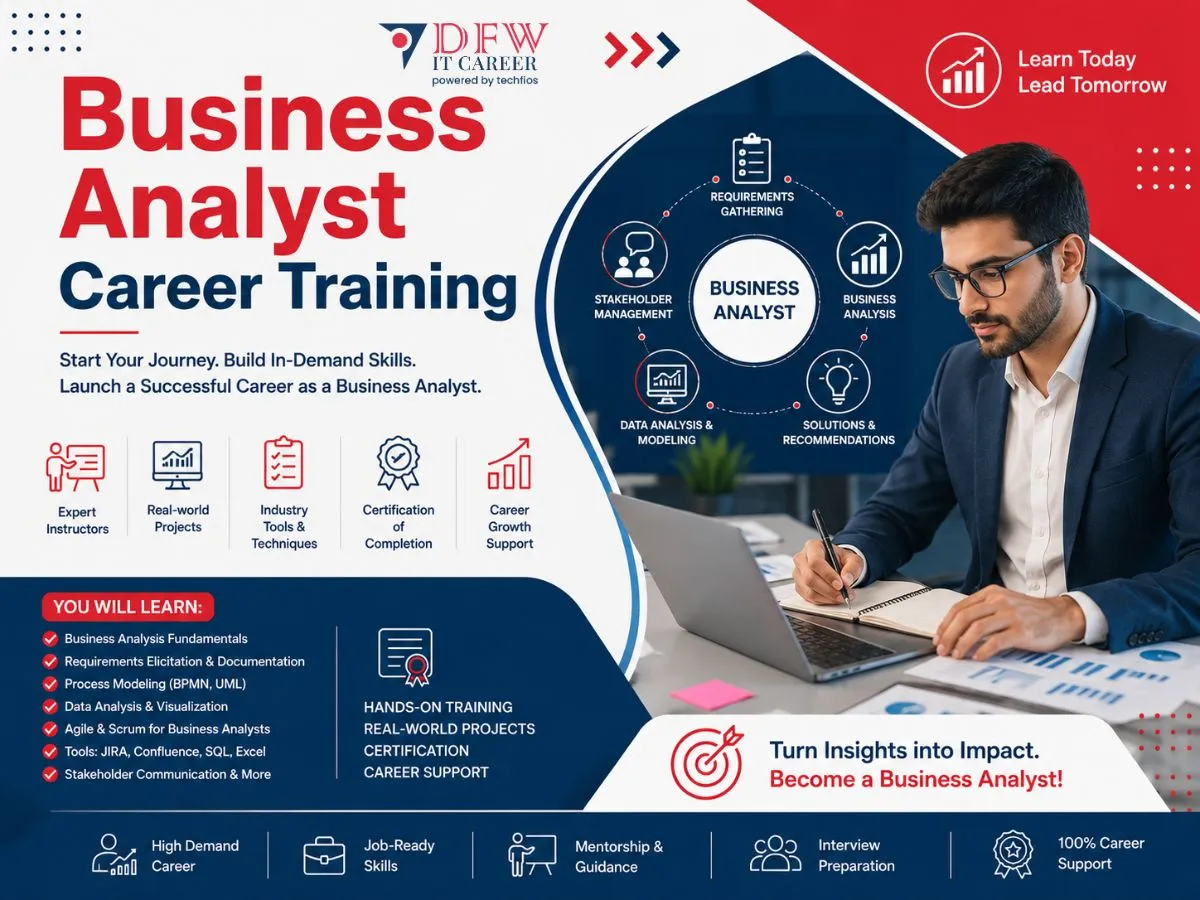
AI rarely works in isolation. It sits on top of existing systems, data pipelines, and business processes. Understanding how AI intersects with adjacent roles makes you a stronger candidate. For example, professionals who understand both AI and the analyst side of the business — pulling insights from data, translating them for stakeholders — often have broader career options. Our guide on what a Tech Analyst actually does is a useful read if you're weighing AI against a more analytical, business-facing path.
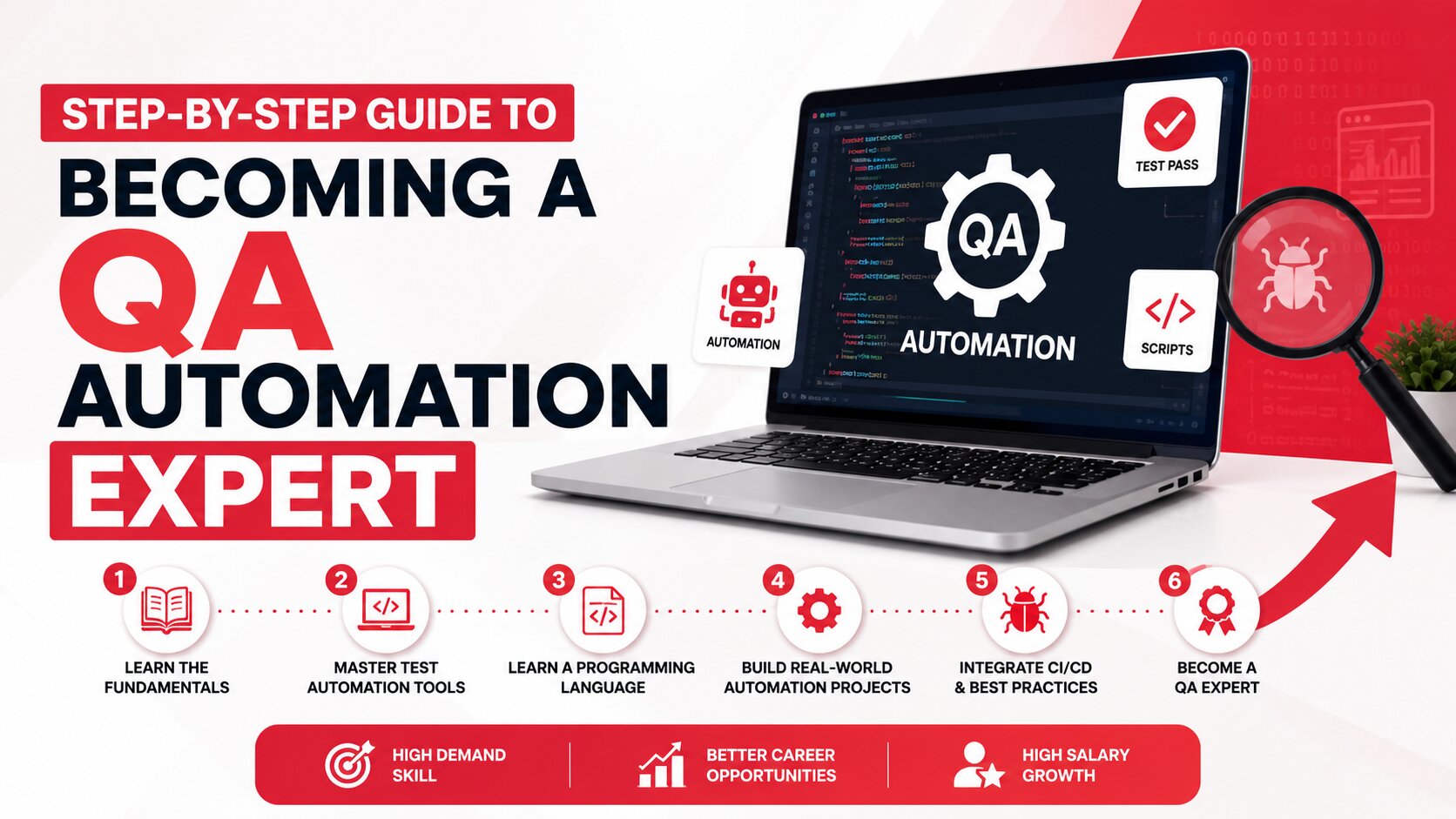
Similarly, if quality assurance and testing interest you, pairing that background with AI knowledge is increasingly valuable — Our step-by-step guide to becoming a QA automation expert shows how automation and AI skills now overlap in that field.
Step 6: Get Structured, Mentor-Led Training
Self-teaching works, but it's slow, and it's easy to build bad habits or skip foundational concepts without realizing it. Structured training with an experienced mentor shortens the learning curve significantly — especially when the curriculum is built around real hiring expectations rather than generic theory.
That's exactly the gap Our AI & Machine Learning course at DFW IT Career is designed to close. The program is led by Syed Nawshad, a Data Scientist with a Master's degree in AI and hands-on experience building enterprise-grade AI systems for government and Fortune 500 projects. Students move through Python fundamentals, core machine learning, deep learning, NLP, and model deployment, then finish with a capstone project and career support — resume building, mock interviews, and job search guidance.
Step 7: Prepare for the Job Search Early
Don't wait until you finish your training to think about job hunting. Start building your LinkedIn presence, contributing to open-source projects, and networking with people already working in AI roles — data scientists, ML engineers, AI consultants. Many hiring managers care more about your GitHub portfolio and your ability to explain your project decisions than about where you studied.
Final Thoughts
Breaking into AI and Machine Learning isn't about memorizing algorithms — it's about building practical skills step by step, backing them up with real projects, and getting guidance from people who've actually worked in the field. Whether you're coming from a non-technical background or already work in IT, a structured path with mentorship, hands-on labs, and job support makes the transition far more achievable than trying to piece it together alone.
If you're ready to start, explore the full curriculum and enrollment options for Our AI & Machine Learning course in Dallas, TX and take the first step toward a career in one of tech's fastest-growing fields.